Tuesday, May 31, 2016

Taking The Leap to Kill Off Your Darlings

As a director it is your job to have a vision for the piece - to have an idea about what you want to communicate and how to get there. This is the phase where everything is a possibility for you. After that it's your job to actually get everyone there, safely and within the allotted restrictions of time and budget. Often this means a lot of thinking, planning, and dreaming well before any of the physical components are in place.

However, once those physical realities start taking shape, you will need to kill off some of your dreamy darlings, and the faster the better. Because until you move on, no one else can either. It's only once we move on that we can start figuring out what will work. Too often we waste time clinging to one magical vision that we have about the way we think a moment should go or the way we think a set or costume should look like. Sometimes those ideas get dragged all the way to opening night, never quite achieving what they were meant to. Prompting the response we weren't willing to see, that it wasn't the right choice for our production. The story of the Emperor's New Clothes is not that the Emperor was fooled, but rather that the Emperor was too afraid to see what was in front of him.

In any given process, what are the things that we can't fix? What are the things that we can't change? (This is kind one step beyond the notion of playing the cards you have.) Is there a structural pillar in the middle of your playing space? Figure out a way that you can incorporate it. Find the possibility. Can it become a tree trunk? Or the post of a front porch? Or a telephone pole? Or a place to hang props? How completely can you integrate what you can't change into the world of your? What if your options for lighting are spartan (at best) and you were longing for something to rival last year's Super Bowl? Time to shift directions. Rob Lowe in his book Love Life talks about how it's always the one line in the script that he hates, that he doesn't initially know how to deliver truthfully, that eventually unlocks the whole character for him. While you're focused on what you can't do, someone else is figuring out how to work with the exact same thing. The unique challenges that you face will point you in the direction of solution that is unique to your production.

We are in the business of blending reality and fiction. Taking fictional characters and making them relatable. Taking true events and crafting them into compelling narratives. When we ignore our physical realities, we can't possibly a fictional world that allows our audience to suspend their disbelief. When we build those realities into our narrative, suddenly everything makes sense. Accept what you can change and exploit it to the best of your ability.

Creativity is born out of limits. There are a multitude of ways to tell any given story. If there weren't, scripts would only ever be produced once with one cast . There's an anecdote I heard at some point where some famous innovator basically said, "what do I care if someone 'steals' one of my ideas, I have millions of ideas and I make more every day." (I cannot for the life of me remember who it was about. Maybe it was about Disney? Tesla? Edison? Someone prolific. Google has not turned up anything to help me pinpoint it. Which ) Regardless, it's great reminder.

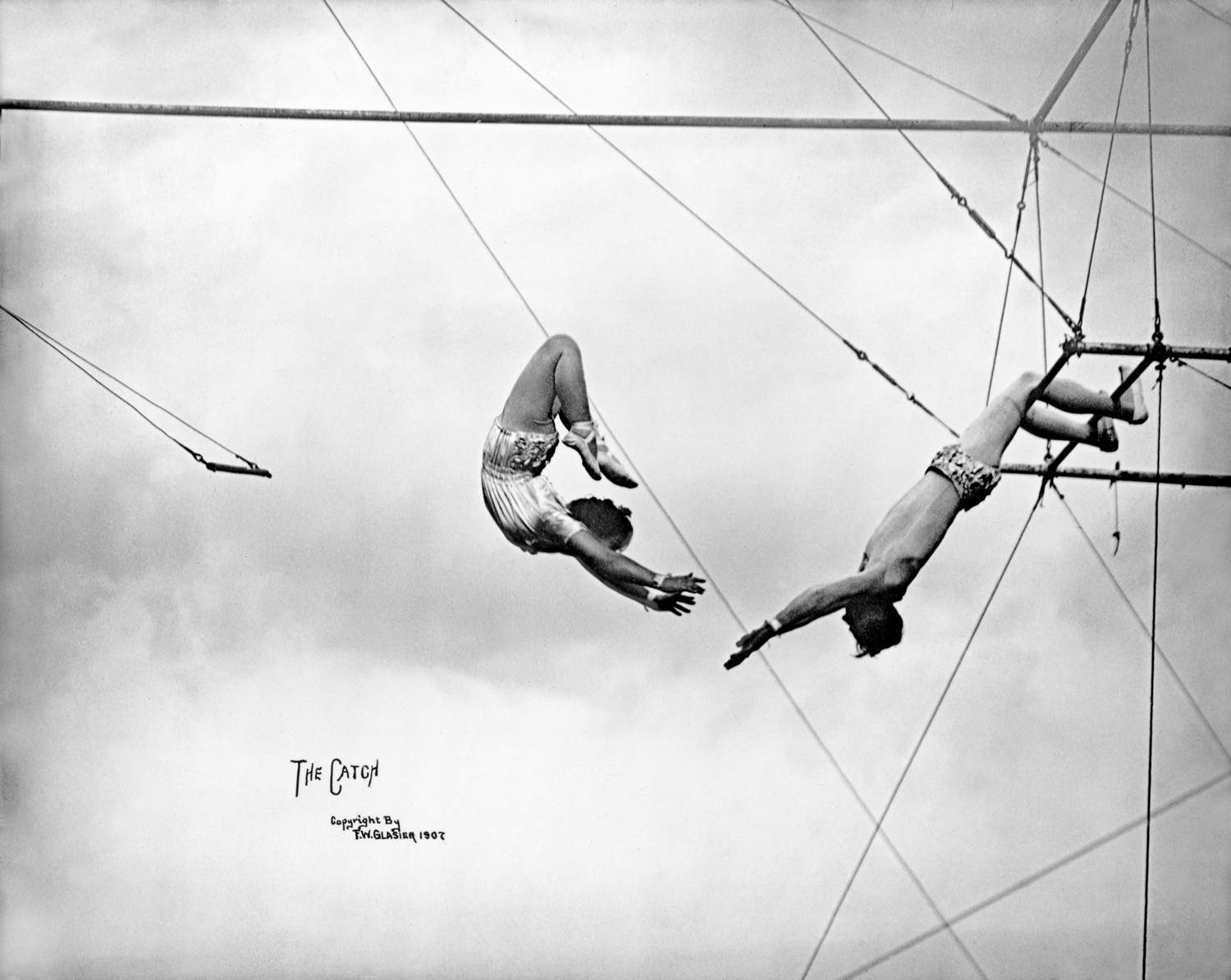
Musicians spend years drilling scales, dancers spend years at the barre - honing their technique, so that when it comes time to perform they can forget all of that minutia and trust in their instrument. You must do the work of dreaming and planning, so that you can let it all go and trust that new dreams will come. There are no short cuts. But unless you leap, there's also no reward.

Questions? Questions? Comments? Post them below. The more the merrier!

Friday, April 8, 2016

Specifically Sexy

In any given system, the better the input, the better the output. You ask the right questions, you get the right answers. You give the right note, (in theory) the better the actor is able to implement it. Now granted, when you're trying to communicate something you may think you've described it with absolute clarity but your recipient may have no idea what you're talking about, so a dialogue between both parties is clutch for ensuring that the message you think you've sent is actually the message that's been received. This whole process works better if we are specific with our language.

One particular concept which might feel specific but is actually incredibly vague is the word "sexy". This includes any note like "do you have anything sexier?" (with regard to audition material), "she needs to be more appealing", "can you seduce him more?". (This is just one example. The word "funny" is another. I'm sure there are many. But for this post I'm going to focus on "sexy".)

There's no one set way to be sexy. If there were, we would all just do that and everyone would sexy to everyone all the time. Which sounds kind of fun until you realize that this would mean your husband/wife now finds that person you can't stand equally as attractive as you. Suffice it to say, sexy comes in many different forms. When the feedback that goes into the system is solely "be sexier", it often results in attempting to do our best imitation of someone widely considered to be sexy. Maybe we speak a little lower or we make our voice a little breathier. Maybe we twirl our hair, or make more eye contact, or smile more. But those are general attempts, rather than a specific embodiment.

I would argue that people are not sexy. People exhibit certain qualities which we as the viewer (or the scene partner) then find enticing. If you've read Robert Greene's The Art of Seduction (not as steamy as it sounds, but very interesting food for thought), this is largely what he's talking about. Sexy is the result, but not the cause. It results because of other characteristics. Perhaps the character is sexy because of their confidence, or their innocence, or their intelligence, or some kind of impressive skill. They can be sexy because they're the life of the party or they can be sexy because they're dark and brooding and just out of reach. So when we're looking to arrive at a desired destination (sexy), we need to provide directions on how to get there. We can tell someone "bring me my pogostick" and let them hunt for it or we can say "bring me my pogostick - it's at the back of the closet by the front door". How to find the pogostick is crucial information. If we can articulate how a character is sexy, then achieving that becomes significantly easier.

I would also argue that sexy is a defined relationship, similar to a chemical reaction, where are parties are in agreement with regard to what the triggers are. If you pour vinegar on baking soda, there will be a reaction. You'll see the foam bubble up instantly. If you pour vinegar on powered sugar (something that looks a lot like baking soda), all you'll get is a really gross mess. But that doesn't mean something was wrong with the powered sugar (or the vinegar). It just means we haven't paired up the right chemicals to create a reaction. So, if we're not getting the desired "sexy" effect, perhaps it's not because the actor (male or female) is doing it wrong but because we haven't agreed on what the make up of "sexy" should be within the given world. It has to be equal parts what-one-character-is-doing and how-the-other-character-is-responding. Both parties have to be on the same page with regard to what sexy means specifically. We want to create a situation, which is true to the text and suited to the actors, that tells the story of two characters being drawn to each other.

If you're getting general output, refine your input. God is in the details.

Thoughts? Questions? Comments? Post them below. The more the merrier!

Monday, March 28, 2016

I've Got The Power

A clear understanding of the dynamics of power are a huge asset in storytelling. After all, it's the dissonance between two forces (and the power they hold) that creates dramatic tension. Yet often these power dynamics aren't as clear as they could be. With theater being a collaborative art form and America being a culture which values the idea that all citizens have an equal voice, I think power is not something we spend a great deal of time focusing on. Or at least it's not something that is acceptable to openly discuss in specific terms. But being conscious of it can really sharpen the conflicts in our story.

When we talk about power, it's important to also talk about status. Status is often a result of your lot in life, whereas power is your a ability to effect it. Status tends to be quantifiable - your rank withing the military, your title within the company, your net worth. Status can certainly effect the power you have, but it is not the only determining factor. Sometimes power and status align, and sometimes they don't. Which is to say, the king can be young, strong, smart, and conniving (having both a kingly status and the power to genuinely rule the kingdom)...or he can be a complete idiot who just happened to be born to the right people at the right time (having only the title, but otherwise being a puppet for those around him). If status is the cards you're dealt, power is the way you play them to your advantage.

One summer I worked as an actor at a Renaissance Festival. As part of our rehearsal process each of the characters were ranked according to status. Whenever you encountered someone of a higher status you had to bow or curtsy. The greater the difference between your status and the other character the deeper your bow was supposed to be, such that when the beggars encountered the queen they would lay prostrate on the ground. It was fascinating to have such a visceral experience of status. Suddenly, for the interactions you witnessed, you had an immediate visual picture of who was supposed to be top dog, just by the way the characters greeted each other. And for the interactions you were part of, you had an immediate context for where you fit within the world.

Status gets interesting at the point where it intersects with power. Power can come in many forms - money, information, social connections, sex, physical strength. Humor can be power. Intelligence can be power. Anything that attracts or repels is power. It can come in the form of friendship ("Hey, we've been buddies for a long time. Would you help me out with this?") or it can come in the form of a threat ("You better do this, or else."). Anything a character can use to affect the action of another character is power. When you are aware of all the different ways a character can have power, it provides you with a wealth of tactics to pursue your objectives.

One type of person who is likely to be particularly attuned to the different tactics for acquiring influence, whether intentionally or unconsciously, is the Alpha. I think of Alphas as being the natural leader of a group. These are the people who emerge as the dominate voice in an otherwise equal peer group. They tend to lead the tone for the group for better or for worse. They are the true head of the snake, so to speak. Obviously, this "Alpha quality" is something of a sliding scale. There are varying degrees of sophistication and effectiveness and it is relative to context. If you cast someone who does not naturally relate to the world in this way, in a role that calls for it, you will need to pay special attention to developing that dynamic.

The Alpha doesn't yell to make their point. They don't have to. Yelling is a symptom of having to struggle to be heard. Similarly, they don't have to move. Their world moves around them. While they might have the ability to physically intimidate others, they know that in the long run they are better off having a range of options with which to control those around them. With physical strength, it is only a matter of time before someone bigger, faster, or stronger comes along. The book Nurture Shock devotes a chapter to discussing how the most socially savvy children, the ones who have the biggest circle of friends, tend to exhibit the highest amounts of social bullying. Their ability to understand the psyche of their peers initially helps them make friends and subsequently allows them to manipulate those relationships as they see fit.

While power certainly isn't the only was to look at a story arch, it can be a really great tool to explore as part of a rehearsal process, especially if the arguments ever feel "one-note".

Thoughts? Questions? Comments? Post them below. The more, the merrier.

Saturday, February 27, 2016

A Nice Personality

There are certain actors who I regard as "plug and play". They are very serviceable. They give a lovely, dependable performance. But I'm never surprised by their choices and I never find their performances to be terribly personal. It's this kind of performance that feels like it could be duplicated by any number of other performers without adding or subtracting to the final product.

Then there are the performers who seem to mesh who they are with who the character is resulting in a blend that is in keeping with the story but unique to who they are as a human being. These are the performances where we can't imagine anyone else in the role. These are the auditions after which no one else is even in the running.

There is a universal component to our emotional experiences which allows us to relate to what happens to a character. But it's the specificity of that experience which helps us really believe that the character is having this experience. Love is an experience we all know, but we each experience love specifically. We fall in love with the way someone smells, or the funny way they laugh, or the way they pronounce the word "tortilla". We hate specifically, becoming riled by the way our nemesis breathes, the way they shuffle their feet when they walk, their choice of syntax. Personality is a short cut to specificity. Integrating some of our own weird little quirks into the mix with the character we develop (as long as they don't contradict the givens of the script) helps flesh out everything that the playwright couldn't squeeze on the page. This mesh between character-as-written and actor is what creates a layered, three-dimensional performance.


A lack of personalization can obviously happen in any piece, but I think some works are more prone to it than others. When there's a preconceived notion of how the piece should be done - based on previous productions, or even just general concepts relating to the time period of the piece - it can become a shortcut to playing a generalization rather than forming our own vision of the piece. Classical work often suffers from this. People form a notion of how classical work should sound or move without first answering for themselves how they would specifically respond to these circumstances. Similarly when something is well known you can fall into unconsciously repeating the choices of previous productions, instead of forging the path for ourselves. For example, with something like The Last Five Years, which for a decade had only one recorded version, it's easy slip into imitating Sherie Rene Scott or Norbert Leo Butz because the interpretation that they arrived at (by really personalizing their roles) is so rich.

The other place where I think it can be difficult to find personalization is in broad comedy. In things like farce and slapstick where the physical comedy is such a key component, the specificity of that physical routine becomes choreography. It's not dance choreography per se, but each movement has distinct requirements of which body parts should be where and a tempo at which it unfolds. The trick is to get the choreography to feel honest and true to the characters. And while this is specific and detailed work requiring impressive technical skill, I don't think it stems from who the actor is as a person. Assuming the show has been well choreographed by both the director and the actor and goes on to be well executed by the actors, the physicality does the work. Which is fascinating given that verbal based comedy can be almost entirely tied to personality, where jokes that kill for one comedian fall totally flat for someone else. Broad comedy is one of the few types of theater where we're not looking for the characters to be three dimensional where as stand-up demands a more personal product.

The range of roles an actor can be called on to play are almost infinite. When we look at the types of performances for which actors get Tony nominations (in theory, reflecting the performances the theater industry considers impressive), they tend to fall into two categories: roles that are technically impressive (e.g. the actor plays a zillion characters) or emotionally impressive (e.g. the actor develops a vision of the role that is rich, layered and unique). Certain roles allow for more personality than others. Certain roles demand more technical skill than others. Both of these are essential. To the extent that it's possible, I want as much personality as possible.

Thoughts? Questions? Comments? Post them below. The more, the merrier.

Sunday, January 31, 2016

Relevant

I've been thinking a lot about Les Mis recently.

I read an article a few years ago about one of the conflicts in the middle east (I don't remember which conflict) and the fact that many Americans couldn't understand why the local populations would fight against the American soldiers who came to free them. The author's point was that the luxury of morality (and fighting for the "good guy") is hard to maintain when your family is starving. In those circumstances, you fight for whoever will give you a bag of rice.

I should specify; I've been thinking about how Les Mis has always seemed like a pretty story rather than something with present day relevance, despite the fact that the overarching concept of Les Mis - a country in the middle of a revolution and the lives it affects - strikes me as incredibly timely. The theme of societal conditions making it easier or harder for a person to do the right thing, is one that I imagine will always be relevant. But, for me, rooting the story in Paris during the French Revolution somehow distances me from that. I keep wondering what it would be like to stage a production of Les Mis in the present (or close to it) and in the Middle East.


This is not something I've thought very far down the road with. At the moment, it's just a fleeting question that won't leave me alone. I'm not exactly sure how well a shift of the setting would intersect with the script and score. I don't imagine Schönberg and Boublil were seeking to make any particular social comment in adapting the novel into the musical. But I do feel safe saying that Victor Hugo was most definitely wrestling with many of the social issue of his day. So, in that sense I feel like it becomes of an interesting question; what if your concept strays from the intention of the adapters but is closer in spirit to original source material?

Then there is the consideration of sides. Within the context of the show, the establishment (the law, represented by Javert) is the villain and students are, if not the hero per se, certainly the good guys trying to win liberty and equality for the people. If you were to set it in the recent Middle East, you would have to pick a side as the oppressive establishment and another as the visionary revolutionists. A move which couldn't help but be seen as a political statement - something which I would want to avoid, given my ignorance as to the subtly and complexity of the situation. Making a statement you intend to make is one thing. Making a statement purely out of ignorance is another and should be avoided when possible. And even if you could somehow avoid naming names in that regard, there is still the issue of a flag. The barricade and its accompanying flag are significant visual aspects of the story. Removing the flag from that image would significantly reduce the emotional impact of that moment of the show. And making a completely fictional flag, or something "vaguely Middle Eastern" seems like an option that could quickly become offensive.

My next thought was perhaps you could do it in a neutral time and place, a la the recent Broadway production of A View From The Bridge, and let the audience draw it's own parallels. It doesn't exactly solve the flag issue, but perhaps something could be established purely with colors, much like the way sports fans rally around their team's colors. The more distant a story seems - the harder it is for the characters to seem like they overlap with your world in some way whether it's that their struggles are your struggles, their words sound like the way you speak, or their clothes look like things you wear - the harder it becomes for the story to feel immediate. Perhaps by adopting a more neutral design palate, you could allow the audience to feel closer to the story, by virtue of the set and costume not highlighting the fact that these events took place hundreds of years ago.

When I watch a show, one of the primary things I want from a show is an emotional connection, ideally an empathetic, emotional connection. Any time I hear someone say they don't like musical theater (or Shakespeare), I always take that as an indication that haven't seen a production that allowed them to relate to the characters in a meaningful way. So, as a director, I'm always looking for points where an empathetic connection can be strengthened, ways to highlight the relevance of the story being told. Sometimes that comes in the form of adding something, sometimes it come in the form of stripping something down. I'm not sure if this concept would be at all effective. But I'm curious.

Questions? Comments? Concerns? Post them below. The more, the merrier.

Tuesday, December 29, 2015

Ladies, All The Ladies.

This post is a response to the production of Henry IV, directed by Phyllida Lloyd, which was recently at St Ann's Warehouse. Since this was my first time seeing a performance of Henry IV (and this production took the liberty of combining parts 1 and 2) I didn't feel like it made sense to make this post about those texts. But I am interested in looking at one of the most notable things about this production - its all female cast. One of the things that I aspire to do as a director is to advocate for more and better roles for women. Shakespearean plays can be particularly uninspiring from this vantage point. Often, you'll have 3 women's roles to 15 men's roles, and the size of those roles is significantly smaller in scope. And while Shakespearean plays are something of an open invitation for various conceptual ideas, it's rare to see an all female production at this level. So, without further ado...

No apologies.

The single most striking element of this production was to see women in roles where there was no apologizing, no softness. In roles where they were initiating action, rather than just responding to what life threw at them. It was thrilling. An actress friend of mine had the opportunity to play Peer Gynt when she was in college. She summarized the difference of experience by saying that female roles are about being female, where male roles are about being human. Which sounds bold, but is actually very true especially with regard to females characters who are under the age of 40. Stories where there is a female protagonist are the minority. When they are the protagonist, their character arch typically revolves around love - falling in love, surviving love gone wrong, etc. And when they manage to avoid the love trap, they tend to be about responding to what's happened to them - a parent has died, they've been diagnosed with cancer, a rebel droid won't leave them alone. Female characters who pursue their own agenda are often portrayed as villains or deranged or both. I don't find that to be an accurate representation of my life or the lives of the women I know. But when you hear all these stories and none of them reflect the reality you experience, you start to think it doesn't really exist. So, it was refreshing on a really profound level to see these women have free reign to be fully human.

I forgot.

There were moments during this production where I forgot I was watching women, moments where I saw them as men. I find this fascinating, especially given that there was no attempt made by the production to disguise them as men. Because of the conceit of this production, that the story was taking place inside a women's prison, all of the women playing male characters were dresses in grey sweats and t-shirts. But no effort was made to pass them off as men. Breasts were not taped down. If they had longer hair, it was simply pulled back in a pony tail. In an interview with Playbill, Lloyd mentioned that she had really encouraged the cast to use space the way men use space (ie. to take up more of it) and that shift felt very palpable. I love when you can do the heavy lifting of your story in an organic way rather than through special effects. If we want to impress people, special effects are great. But if we want people to be able to relate to us, it's better to use our own facility.

The least interesting...

I found the two female characters of this production (Lady Percy and Mistress Quickly) to be the least interesting. I'm not entirely sure why that was. Certainly, they are among the smaller roles and are not intricately involved in the plot. But I wonder if having an all female cast contributed, in part, to that dynamic. In a production with traditional casting, these roles could display more masculine characteristics - Percy can be blunt in telling people exactly what she thinks, Quickly can crass and bawdy - without ever being in danger of confusing the issue of whether they are playing men or women. I don't think these roles were intentionally pulled back, but they just didn't standout. It's worth thinking about how you distinguish your female roles from your male roles (and what function they serve) when your entire cast is female.

Still different.

I read an article recently that talked about the word "equal". Its point was that we've begun using "equal" as a synonym for the word "same" and that we should strive to avoid that. Equal refers to a fixed quantity. Thus, men and women are not equal. They can have equal rights. They can be paid equal salaries. They can have equal intelligences. But they are not the same items. And when you replace one with the other, while many things will remain the same, there will be a shift in some things. One of the things my husband remarked on with regard to this production was that he missed the genuine affection and comradery between Hal and Falstaff that he had seen in more traditional productions. Which makes sense. The bulk of the interaction between these two revolves around Hal publicly humiliating Falstaff, a dynamic which is all in good fun among a group of guy friends. But among women, that dynamic doesn't exist. Among women, that behavior is malicious and signals a major breach in the relationship. And since the women where not disguising themselves as men, this change of dynamic altered their relationship and significantly reduced the impact of Hal severing all ties with Falstaff in the final moments of the production.

Questions? Comments? Concerns? Post them below. The more, the merrier.

Friday, November 20, 2015

Grey It Up

I love me a grey character. What I mean by that is I love a character who really makes you weigh how you feel about them. The hero who isn't the nicest person or doesn't always do the noble thing. The villain who stirs our pity with a relate-able motive. Some people might call these characters complicated. But the word complicated implies something difficult to understand. I think of these characters as human. They are doing what they feel they have to do. For my tastes, the hero would be as flawed as the villain and the villain would be as right in his argument as the hero. Because then you have a match between two worthy opponents, a match either side could potentially win. Every now and again, you get lucky enough to meet characters who are written like this on the page. These are scripts that I consider to be virtually actor-proof. You could cast almost anyone and as long as they commit to saying the lines, the story will still be compelling. But more often than not you have to do what you can to try to blur the edges.

Obviously one of the places where you can work to balance out a character is in the casting. Casting against type can be a great way to amp up the humanity of your characters. The caveat here is that you don't want to cast some who is completely wrong for the part. But there's often a wider range of actors who could do the role successfully than we consider. Do a quick analysis - what one thing must the character have in order for the story to be believable and what one thing is glaringly absent from the character as it's written? Does the character really have to be a certain race? A certain gender? A certain age? Especially when you're working on new work, these "givens" can be much more flexible (and thereby become more interesting) if we allow them to. I think the point where an actor/character intersection becomes the most interesting is when you can find someone who understands (and can deliver) on the one thing you need, but who lives in the world of the one thing that the character is lacking.

Another point where characters can be greyed up is in their interpretation. If we're working on a script that we can't change, we don't have the option of adjusting the arguments to be more balanced. But we can shape the behaviors and influence the motivations in and around the text of the script. We don't react to events, we react to what we believe about events. Which is to say, it's not the act, but the context of the act that shapes how we feel about it. As an act, we can agree that killing someone is generally perceived as wrong. But if we believe that someone was killed by accident or in self-defense, how we feel about the killer can shift considerably. As an act, promoting someone might be seen as a nice thing to do. But if one person is promoted in order to smite someone else, suddenly the promotion isn't as generous an act as it was before. Even if we don't agree with why someone has done something, knowing why they're doing what they're doing goes a long way toward making them feel more human.

First and foremost, we want our characters to be honest and we want the story to make sense. But that's really the bare minimum. Once that requirement has met, we want to be interested. And when we look around, real life is chock-full of interesting. Things are rarely, if ever, purely black and white. Who is a hero and who is a villain is a constantly shifting landscape. To some degree, we are always a bit of both. Even the "right" answer to any problem leaves a trail of pros and cons in its wake. We own it to ourselves to reflect that in our work.

Thoughts? Questions? Comments? Post them below. The more, the merrier.